Mold removal costs in Clearwater, FL can vary depending on the size of the affected area, extent of mold growth, moisture source, type of building materials involved, and the amount of cleanup required. A small localized issue can require much less work than widespread mold contamination following water damage or flooding.
Use our Clearwater mold removal cost calculator to get a general idea of what your project may cost. Your actual estimate will depend on the property, contamination level, affected materials, accessibility, and remediation work required.
Estimate the total square footage showing visible mold or water damage.
Estimated Cost
$0 – $0
This is a rough planning estimate and not a final quote.
How pricing works: Mold Removal Clearwater FL connects you with independent, licensed mold and restoration providers. Final pricing is set by the provider and depends on an in-person inspection, extent of contamination or water damage, and any hidden moisture found behind walls or flooring.
Want an exact number? Call (727) 205-1165 for a complimentary inspection.
Several factors can influence the total cost of mold remediation. The size of the affected area is one of the most important considerations, but it is not the only one. A small area with hidden mold behind drywall may require more work than a larger, easily accessible surface.
The type of building materials affected also matters. Mold may be present on drywall, wood, insulation, flooring, or inside other areas of a property. Materials that cannot be effectively cleaned may need to be removed and replaced.
The source of moisture is another major factor. Leaks, flooding, roof problems, air-conditioning issues, condensation, and excessive humidity can all contribute to mold growth. Addressing the moisture problem is an important part of preventing the contamination from returning.
Access, containment requirements, air filtration, antimicrobial treatment, cleanup, and the overall level of contamination can also affect the final estimate.
Mold inspection, testing, and remediation are different services and may be needed at different stages of a mold problem.
A mold inspection helps identify visible and hidden mold, moisture intrusion, leaks, condensation, ventilation concerns, and other potential sources of contamination. Mold testing can provide additional information about the presence and type of mold when testing is appropriate.
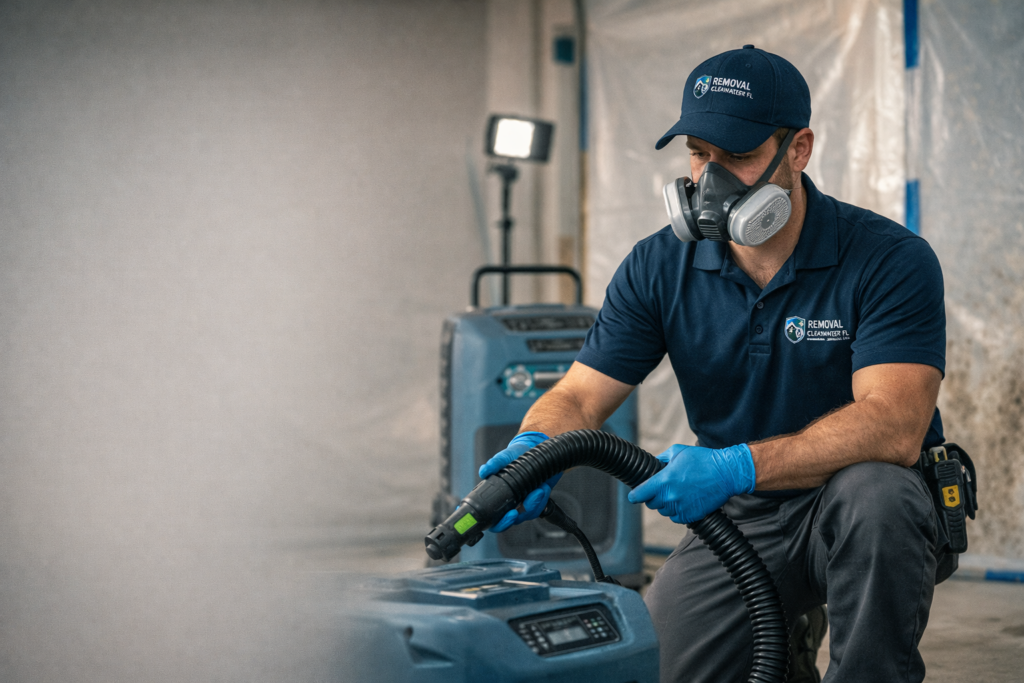
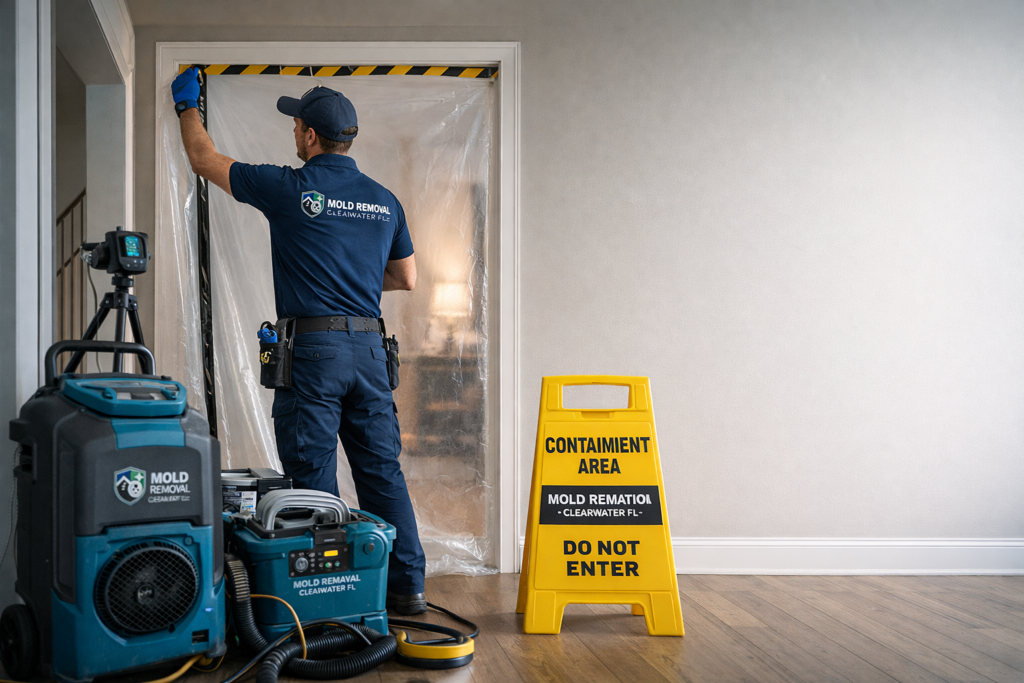
Mold remediation involves addressing the affected areas and controlling the spread of contamination. Depending on the situation, the process may involve containment, HEPA filtration, air purification, mold removal, antimicrobial treatment, cleaning, and moisture control. These services are listed among the company’s Clearwater offerings.
The total cost depends on which services are required and the condition of the property.
Mold removal projects can vary considerably between residential and commercial properties.
For a home or condo, the affected area may be an attic, crawl space, bathroom, kitchen, bedroom, drywall, or HVAC-related area. Smaller localized problems may require less equipment and labor, while extensive contamination can involve multiple rooms and building materials.
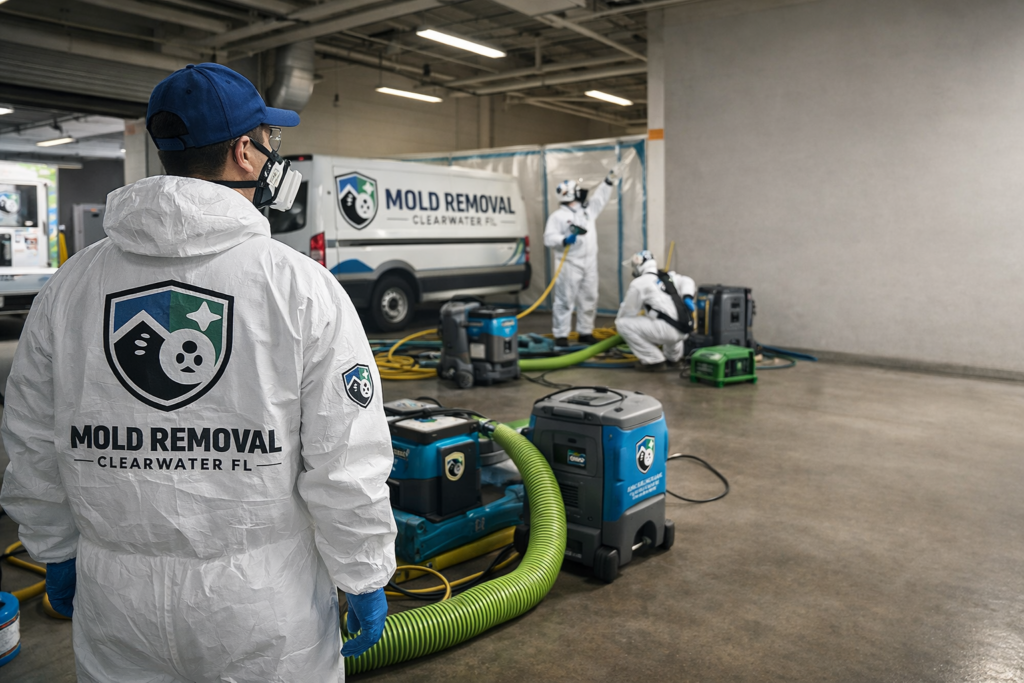
Commercial properties can involve larger affected areas and more complicated access, containment, and restoration requirements. The number of rooms, size of the building, type of materials affected, and extent of water or mold damage can all influence the project scope.
Whether the property is residential or commercial, a proper assessment is important before determining the appropriate remediation approach.
Water damage and mold growth often occur together. A leaking pipe, roof leak, flooding, sewage backup, or other source of excess moisture can create conditions where mold develops.
When water damage is present, the project may involve water extraction, drying, moisture control, damaged-material removal, mold remediation, and restoration. The website specifically lists water extraction and water restoration among its services.
The sooner excess moisture is addressed, the easier it can be to limit additional damage. If mold is already present, simply drying the area may not resolve the contamination, and a professional assessment can help determine the appropriate next step.
Mold can develop in several areas of a Clearwater property, including attics, crawl spaces, bathrooms, kitchens, drywall, duct systems, and wood structures.
The cost of remediation depends on the size and accessibility of the space, moisture conditions, materials affected, and extent of contamination. Tight crawl spaces or areas with limited access may require additional preparation and labor.
Attic and crawl space problems can also be connected to roof leaks, plumbing issues, ventilation problems, humidity, or condensation. Identifying and addressing the underlying moisture source is important when developing a long-term remediation plan.
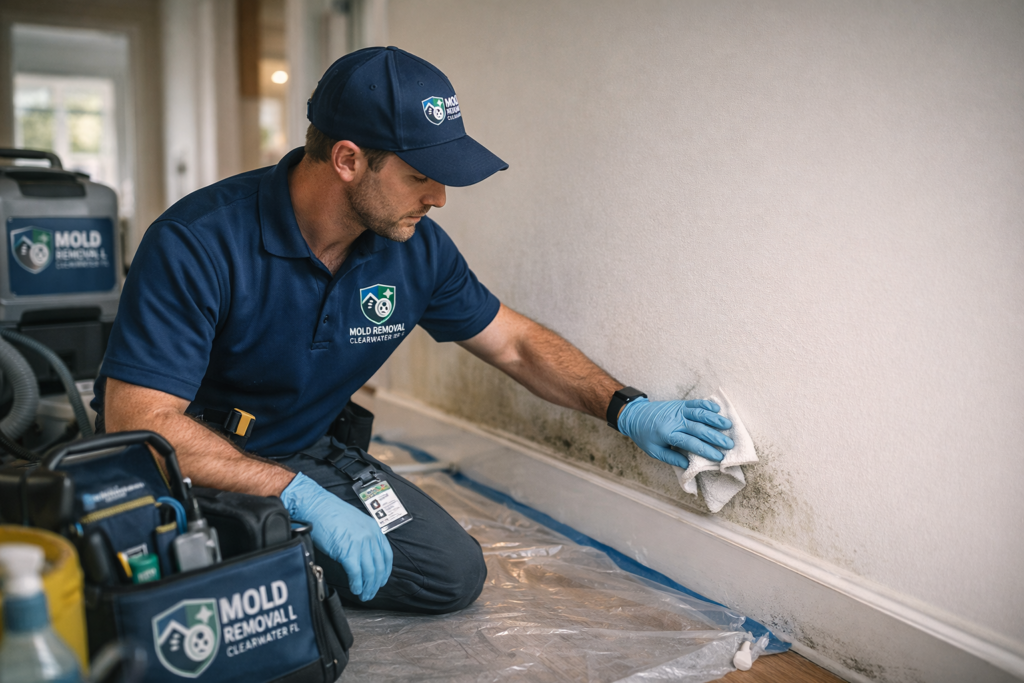
Mold problems can involve more than the visible growth on a wall or ceiling. Hidden moisture, contaminated materials, and the source of the problem all need to be considered when planning remediation.
Whether you need mold inspection, mold testing, mold remediation, mold removal, or water damage restoration, getting the affected area assessed can help determine the appropriate next step.
There is no single price for every mold removal project. The total cost depends on the affected area, severity of mold growth, moisture source, materials involved, accessibility, and remediation procedures required.
Mold testing and mold remediation are separate services. Testing may be recommended when additional information about mold contamination is needed. Whether testing is appropriate depends on the specific situation.
Not necessarily. Inspection, testing, and remediation are different parts of the mold-management process. An inspection can help determine where mold or moisture problems exist before the appropriate remediation work is planned.
Common moisture sources include plumbing leaks, roof leaks, flooding, water damage, condensation, HVAC issues, and excessive indoor humidity. The website specifically notes leaks, flooding, roof issues, air-conditioning problems, and excess humidity as potential causes.
Yes. Mold can develop in hidden areas where moisture is present, including behind drywall and within other building materials. Hidden growth may require inspection and controlled removal rather than simply cleaning the visible surface.
The website states that many mold remediation and restoration projects take approximately 1–5 days, although the actual timeframe depends on the extent of mold or water damage, contamination levels, and affected area.
Yes. Excess moisture from flooding, leaks, or other water damage can create conditions that support mold growth. Addressing the water source and moisture levels is an important part of preventing further mold problems.
The best way to obtain a project-specific estimate is to have the affected property assessed. The inspection can help determine the size of the affected area, moisture source, materials involved, and remediation work required.